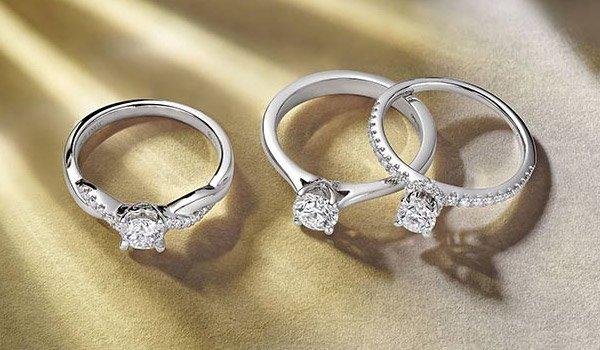
I’ve spent nearly two decades around jewellers, designers and the sort of craftspeople who can look at a rough stone and already see the ring it’ll become. And honestly, if you’d told me even 10 years ago that lab grown diamonds would capture the imagination of everyday Aussies — not to mention make seasoned jewellers rethink their entire approach — I probably would’ve raised an eyebrow.
But here we are.
CVD lab-grown diamonds aren’t just “an option” anymore. They’re becoming the conversation. I’ve watched couples walk into a showroom assuming they’ll buy a mined stone, only to leave absolutely besotted with a diamond grown in a lab. And if you’re curious about why the shift feels so rapid, so dramatic, and so… natural, you’re not alone.
Well, let’s get into it. Because the story of CVD diamonds isn’t just about tech or trend — it’s about values, transparency and a surprising cultural shift across Australia.
Table of Contents
So, What Exactly Are CVD Lab-Grown Diamonds?
You might not know this, but “lab grown diamonds” is actually a broad umbrella. There are two main ways to grow them — CVD (Chemical Vapour Deposition) and HPHT (High Pressure High Temperature). Each method produces a real diamond, with the same physical, optical and chemical properties as one pulled from the ground.
I remember the first time someone handed me a CVD diamond years ago. Honestly, I kept flipping it over, checking facets, looking for… something. A clue. Anything. But no — it looked exactly like the natural stones I’d handled for years.
The CVD process itself is strangely poetic. A tiny diamond “seed” is placed in a chamber filled with carbon-rich gases. Those gases get heated until they break apart, allowing pure carbon atoms to settle onto the seed layer by layer. It’s a bit like watching frost form on glass, except what you end up with is a crystalline structure of remarkable clarity and precision.
If you want to dive deeper into the nuances between the two growth methods, this guide on lab grown diamonds cvd breaks it down in a surprisingly approachable way.
CVD diamonds are generally known for producing cleaner, more consistent stones — which is one reason jewellers, myself included, keep gravitating toward them.
Why Australians Are Suddenly Paying Attention
There’s a distinctive shift happening in local buying habits. I’ve seen it with engagement rings, earrings, even men’s wedding bands. It’s not just young buyers leading the charge, either.
After speaking with clients over the years, here’s what keeps coming up:
1. Ethical clarity matters now — genuinely matters
Australia might not shout about it, but we’re deeply values-driven. People don’t want vague answers about sourcing or mining practices. They want to know their purchase has a clean story. No questionable origins, no murky supply chain.
CVD lab grown diamonds offer that clarity in a way mined stones simply can’t.
2. Environmental concerns aren’t fringe anymore
Mining isn’t gentle. Even the most responsible operations leave a footprint. CVD production isn’t zero-impact, but it’s drastically lower and far more controlled. And Aussies appreciate that transparency — it feels like a step toward conscious luxury rather than guilt-tinged indulgence.
3. Value for money has entered the chat
Let’s be real: cost matters.
The idea that you can buy a diamond of the same sparkle, same chemical makeup, same brilliance — often 30–60% less — is appealing whether you’re planning a proposal or upgrading your jewellery wardrobe.
The value proposition isn’t “cheap.”
It’s smart.
But Are CVD Diamonds Real Diamonds?
This question still pops up more than you’d expect, and I get why. The phrase “lab grown” can sound like something artificial — the culinary equivalent of margarine or instant mashed potatoes.
But that comparison couldn’t be further from the truth.
CVD diamonds are diamonds.
Not simulated, not synthetic, not imitation.
They’re crystallised carbon in its purest form.
You could hand a gemmologist a mined stone and a CVD diamond side by side, and without specialised equipment, they wouldn’t be able to tell which is which. And even when labs do analyse them, the goal isn’t to determine “real vs fake,” but simply to identify how the diamond was formed.
The beauty, the sparkle, the fire — it’s all there.
I was genuinely surprised the first time I realised how many high-end jewellers had quietly started incorporating lab grown stones into their collections. They weren’t waiting for the public to catch up. They were already convinced.
The CVD Advantage: What Makes This Method So Appealing?
While both HPHT and CVD create beautiful diamonds, CVD offers a few subtle perks that buyers often find compelling:
Cleaner growth environment
Because CVD happens in a controlled chamber, there’s less risk of the stone picking up metallic inclusions. That means clearer, more predictable diamonds.
Greater control over the final result
CVD allows scientists to fine-tune temperature, pressure, and gases — giving unbelievable precision. If you’ve ever obsessed over diamond clarity or colour, you’ll appreciate how significant this is.
Typically better for larger diamonds
Scaling up size can be easier with CVD, which is why so many dazzling 2- and 3-carat lab grown diamonds in Australian jewellers’ windows are CVD-grown.
Better colour consistency
You know how mined diamonds sometimes show tinting or undertones? CVD diamonds are often impressively colourless.
But beyond the technical stuff, there’s something else I’ve noticed: CVD diamonds feel modern. They’re the kind of innovation that sparks curiosity rather than suspicion.
My Experience Watching Customers React to Their First CVD Diamond
Every jeweller has stories — the couple who burst into tears, the partner secretly texting photos to their friends, the moment someone gasps under the showroom lights. But seeing people react to CVD stones has its own flavour.
There’s this mix of awe and relief.
Awe because they genuinely can’t believe the sparkle.
Relief because suddenly the dream ring they wanted is within reach — ethically, financially, emotionally.
I remember a bloke from Brisbane who’d been saving for years for an engagement ring. He thought he’d have to settle for a much smaller stone. When he saw what lab grown diamonds could offer, he just stood there shaking his head, saying, “Mate… this feels like cheating, but in the best possible way.”
That’s the reaction more and more Australians are having.
The Catch: Are There Downsides?
I’m not here to sell you the fairy tale. Like anything in life — property, tech, even coffee machines — diamond choices come with pros and cons.
Here are the real considerations:
Resale value isn’t as strong (yet)
Lab grown diamonds don’t currently hold resale value the way mined stones do. Then again, most people aren’t buying their engagement ring as an investment — they’re buying it as a symbol. Still, it’s something to weigh.
Market perception is still evolving
Nine out of ten people now understand lab grown diamonds are real, but you’ll still meet someone’s Uncle Barry who swears he “only buys natural.” Perceptions change slowly. But they are changing.
CVD isn’t inherently better — quality still varies
Not all CVD diamonds are created equal. Growth quality, post-growth treatment, and cutting all matter. A certificate from IGI or GIA helps ensure you’re buying a proper stone.
That’s where doing a little research (or speaking with a jeweller who isn’t trying to push one agenda) becomes invaluable.
So, How Do You Choose a Good CVD Lab-Grown Diamond?
Alright — here’s the practical bit, drawn from experience, not marketing spin.
1. Always look for certification
GIA, IGI, GCAL.
No certificate, no deal.
2. Check the growth type on the report
It will note whether the diamond was grown via CVD or HPHT.
3. Don’t skip the cut grade
People get caught up in carat size, but cut determines sparkle. A beautifully cut 1.5-carat diamond will outshine a poorly cut 2-carat stone every time.
4. Inspect it under different light
Showroom lights can make anything glitter. Ask to step outside. Natural sunlight reveals the truth.
5. Compare colour grades in person
Sometimes a G colour looks just as icy as a D colour — but for far less.
If you’re deep in research mode (and who isn’t, once they fall down the diamond rabbit hole?), this buying guide on lab grown diamonds is surprisingly helpful and written in plain English.
Why I Think CVD Diamonds Are Here to Stay
I’ve watched enough trends come and go — rose gold mania, chocolate diamonds, the brief era when everyone wanted black diamonds — but this shift feels different.
CVD lab grown diamonds aren’t a fad.
They’re a technology that aligns with how people want to live today.
We’ve entered an era where luxury doesn’t need to be extracted from the earth to feel meaningful. Where beauty can be engineered responsibly. Where design and ethics finally sit comfortably together.
And honestly? It feels refreshing.
The Bigger Picture: What This Means for the Future of Jewellery
If I had to bet, I’d say the jewellery world is heading down a path where mined and lab grown diamonds coexist — not as rivals but as different expressions of the same art form.
Mined diamonds will always have their mystique. Their geological journey is extraordinary. But CVD diamonds carry a different kind of story — one rooted in innovation, accessibility, and human creativity. And a lot of Aussies connect with that.
I suspect we’ll see more designers experimenting with larger, bolder stones now that cost isn’t such a barrier. More couples choosing meaningful rings without the financial strain. More transparency across the board.
And that’s good for everyone.
A Final Thought — From Someone Who’s Seen Both Worlds
If there’s one thing working in the jewellery industry has taught me, it’s that people don’t buy diamonds just because they sparkle.
They buy them because they represent commitment, achievement, celebration, love, memory… the intangible stuff that makes us human.
Whether your diamond comes from deep in the earth or from a meticulously controlled CVD chamber, what matters most is how it makes you feel.
And if lab grown diamonds help more Australians experience that magic — without compromise — then honestly, I’m all for it.